Why Pawscout
Finding is solved. Responding isn’t.
Phones find phones. Networks find keys. Somewhere along the way the world got very good at locating things — and no better at getting a frightened animal home. Pawscout exists for the part that still takes people.
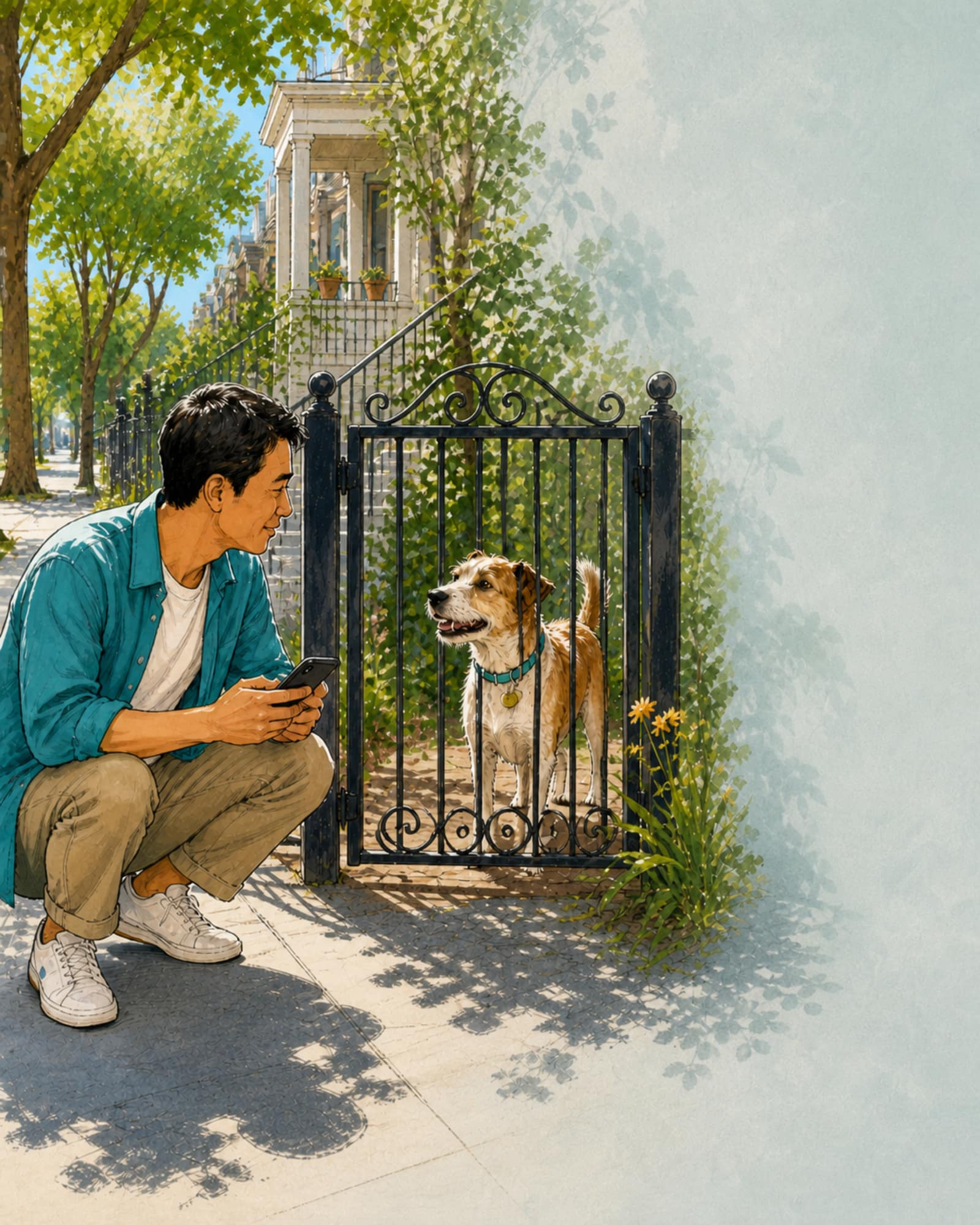
What changed — and what didn’t
The lost-pet problem has three parts. Two of them were solved by other people, for free. The third is the one that matters.
Finding
SolvedBillions of phones now quietly locate lost objects for free. That is the easy part of a lost pet, and it is done.
Broadcasting
SolvedA lost-pet post reaches a whole neighborhood in minutes. Getting the word out stopped being the bottleneck years ago.
Responding
OursWhat happens after someone spots your pet is still improvised — by strangers, in the dark, without a plan. That is the hour nobody owned.
How pets actually come home
Close to home.
Through a neighbor.
In the first hours.
Study after study says the same thing: most lost pets are found within a few blocks, by someone nearby, in the first day. Shelters are the last ring, not the first. The difference between a scare and a tragedy is usually whether the person who sees them can act — and whether the family is ready when they do.
People want to help. What they lack is a way. Pawscout is the way: an identity anyone can read, a circle that already knows the plan, and a response that starts the second someone stops.
Principles
What we believe
- 01
Identity is a right.
Every pet deserves a rescue profile anyone can read. Not a feature, not a tier — the starting point.
- 02
Care is a team sport.
The people around a pet are the safety net. We build for the circle, not the individual.
- 03
Helping should cost a stranger nothing.
No app, no account, no friction for the person who stopped. We will never put a gate between a finder and a pet’s family.
- 04
Ready beats lucky.
Readiness is a checklist with names and dates on it — never a mystery score, never a promise we can’t back.
- 05
We say what’s true.
No fake urgency, no invented numbers, no implying we know where your pet is when we don’t. Calm is a feature.
Where this goes
The response layer, built out
We’re building the layer that turns a sighting into a homecoming. This is the direction — in plain terms, not promises.
Stay ready
Readiness that earns something — a credential a vet, an insurer, or a landlord can recognize. Quiet warnings when escape risk runs high: fireworks nights, storm fronts, a new routine.
Know sooner
An assistant that starts the conversation instead of waiting to be asked — a nudge when a vaccination is coming due, when a life stage turns, when a weight trend is worth a look. It already knows each pet; the next step is for it to speak first.
Reach
Response drills that measure how fast your circle actually answers, not how fast we hope it does. A bench of verified helpers who said yes before you ever needed them.
Organize
Sightings that add up to a direction instead of a pile of pins. Safe-hold requests so a finder can keep a frightened pet overnight with confidence.
Bring home
A recovery report after every reunion — what worked, who helped, how long it took — so the next family starts smarter than the last.
Bring Pawscout home
Their profile, their people, their way home — set up in minutes, free to start. And the person who finds your pet will know exactly what to do.