Guides·Settle in
The first 30 days with a rescue dog
A new dog doesn’t know this is home yet. How to keep them safe while they learn it — doors, leashes, names, and the people who should be in the loop.
5 min read
The weeks after adoption are the most likely time a dog goes missing — not because rescue dogs are flighty, but because nothing is familiar yet. They don’t know the sound of your car, the smell of your street, or that the person calling their name means them. If they slip a collar on day three, they have nowhere to run back to.
So the first month has two jobs: keep them physically contained, and give them every reason to learn that this is home.
Set them up on day one, not day thirty
Create their profile before the first walk. Use a photo from today — not the shelter’s listing — and fill in the things a stranger would need: how they are with people and other dogs, whether they startle, any medication. A dog who doesn’t know their own name yet can’t help a stranger. Their profile can.
Add the people who should know about this dog: the rescue contact, your vet, a neighbor with a key, the friend who’ll walk them. Two people who answer their phone is the whole point.
Contain first, train second
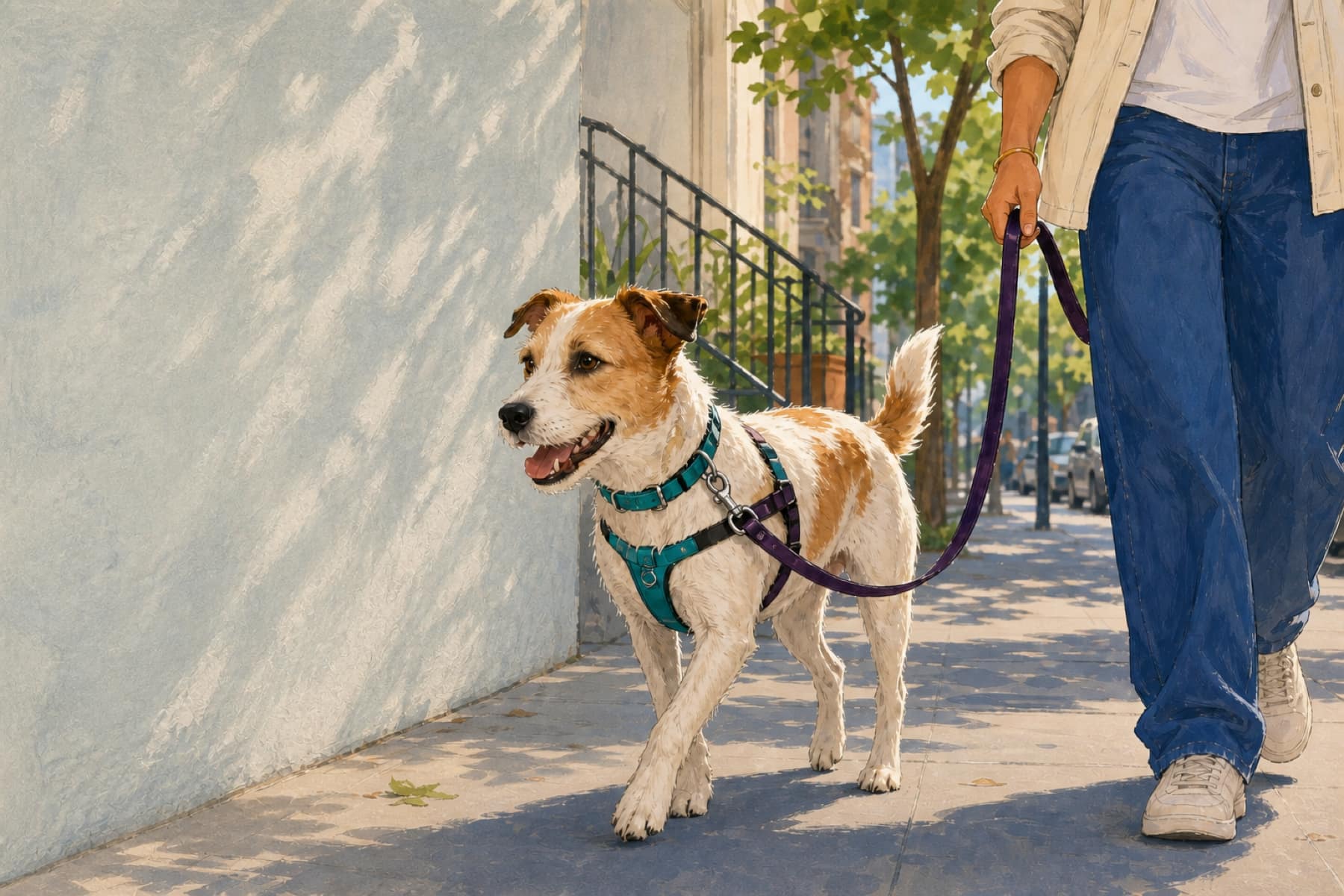
- A well-fitted harness plus a collar, with the leash clipped to both, for every walk in month one. Slipped collars are the classic escape.
- Hand on the leash before the door opens, every time. Doors are where dogs are lost.
- Check the fence line yourself. A dog who is new and anxious tests boundaries you stopped noticing years ago.
- Skip the dog park and the off-leash trail for now. Recall is a relationship, and you are still strangers.
- Keep car doors closed until the leash is on. Parking lots are the second most common place a new dog disappears.
Teach them the way home
Walk the same route for the first few weeks — out your door, around the block, back to your door. You are building a scent map. If they ever do get loose, that map is what brings them back. Say their name, then give something good, a dozen times a day. By week three the name should turn their head from across the room.
Let them decompress
Many rescue dogs spend the first days sleeping, hiding, or watching. That is not a problem to fix; it is a nervous system catching up. Keep visitors few, routines boring, and expectations low. The dog who emerges in week four is the one you actually adopted.