Guides·Prepare
Moving house with a pet
Moves are when pets get lost twice — once in the chaos of moving day, and once in the weeks after, in a neighborhood they don’t know. A plan for both.
4 min read
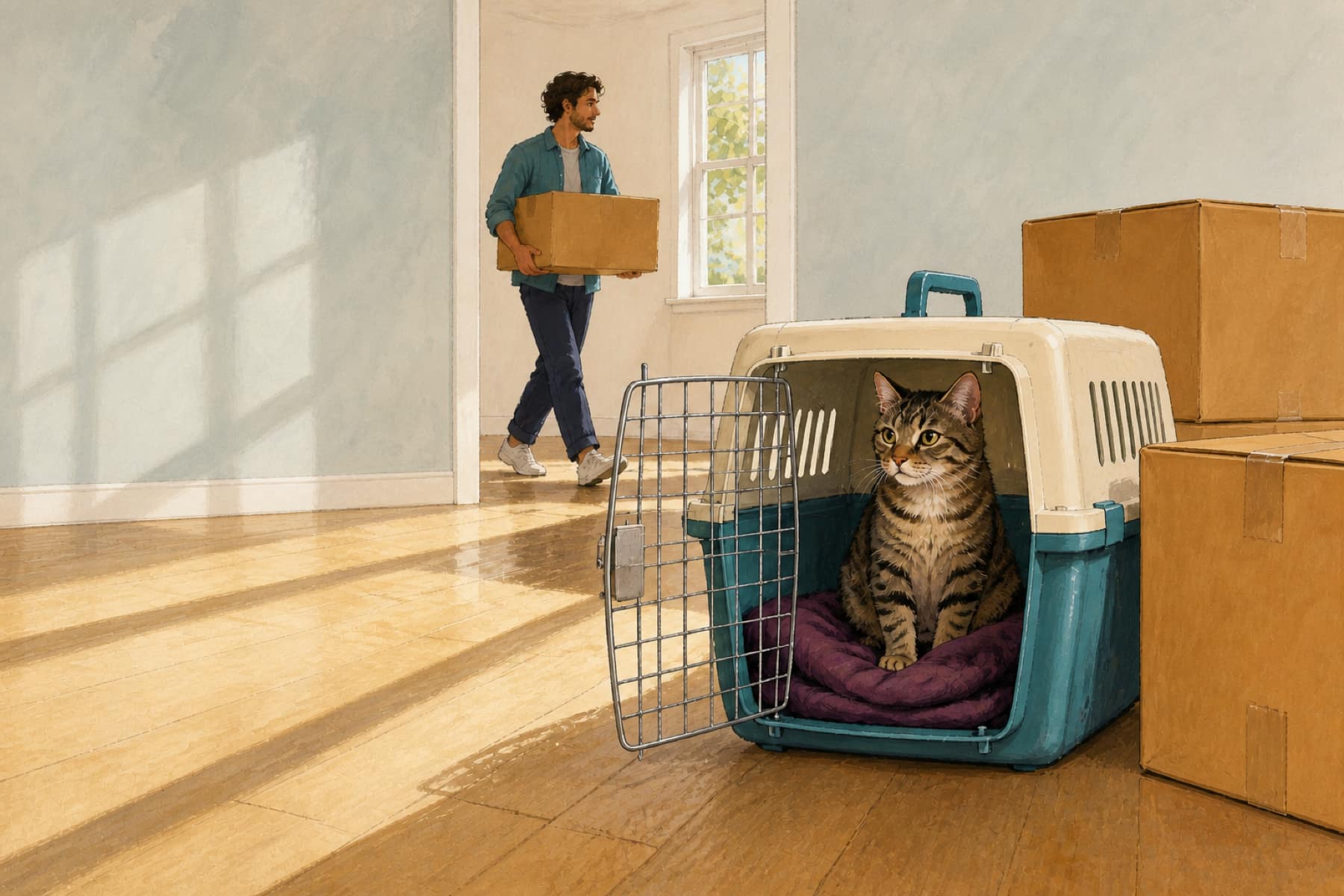
A move breaks every rule your pet has learned about where home is. Doors stand open for hours, strangers carry the furniture away, and then the car stops somewhere that smells like nothing. The risk comes in two waves, and they need different plans.
Before the move: update the one thing people will read
Your pet’s profile should carry the new address and the right phone numbers before the truck arrives, not after. If someone finds them on moving day, you want the contact that rings in your pocket — not the landline you’re about to disconnect. If they wear a tag, this is the moment it earns its place: nothing to reprint, nothing to re-engrave.
Tell your Care Circle the dates. Add someone from the new place — a new neighbor, a friend nearby — even if you barely know them yet.
Moving day: one closed room
Pick a room that will be emptied last, put your pet inside with their bed, water, and a note on the door, and close it. Tell the movers. A cat in a closed bathroom is bored; a cat in an open house with six strangers and a loading ramp is gone.
Travel with pets in the car with you, in a carrier or harness, never loose. Arriving is another open-door moment: leash on before the door opens.
The first weeks: the new neighborhood is unknown territory
Keep cats indoors for at least a few weeks, however much they protest — they need to build a scent map before they can find their way back. Walk dogs on leash on the same short loop every day until the route is boring. Introduce yourself to the neighbors with your pet at your side; the people who recognize your dog are the people who will bring them home.
Find the new vet and put the number in the profile. Check the fence before the first unsupervised minute in the yard.